Hello Mummy! Noticing a rash on your baby’s skin can be stressful, especially for new parents who are still learning what’s normal and what’s not. Because a baby’s skin is thinner and more sensitive than adult skin, irritation can happen easily. The reassuring news is that most baby rashes are common, mild, and treatable with simple care.
This guide explains the most common types of baby rash, what causes them, and how parents can help keep their baby’s skin healthy and comfortable.
JOIN OUR WHATSAPP GROUP FOR MORE UPDATES
Why Baby Rashes Are So Common
A baby’s skin barrier is still developing, which makes it more vulnerable to moisture, friction, and environmental irritants. Common triggers for infant skin irritation include:
- Prolonged exposure to wet or soiled diapers
- Heat, sweat, or overdressing
- Saliva and drool, especially during teething
- New foods or formula changes
- Fragranced soaps, wipes, detergents, or lotions
- Allergies or mild infections
Because babies cannot communicate discomfort clearly, skin changes are often one of the first visible signs that something is irritating them.
ALSO READ: Hand, Foot, and Mouth Disease (HFMD)
Common Types of Baby Rash
Diaper Rash
Diaper rash is one of the most frequent skin concerns in infants. It typically appears as red or irritated skin in the diaper area and is often caused by moisture, friction, or prolonged contact with urine or stool.
Care tips:
Change diapers frequently, gently clean the area, allow it to dry completely, and apply a fragrance-free barrier cream designed for babies.
Heat Rash
Heat rash occurs when sweat becomes trapped under the skin, usually during warm weather or when a baby is overdressed. It often appears as small red bumps or tiny blisters, especially in skin folds.
Care tips:
Dress your baby in lightweight clothing, keep the environment cool, and allow the skin to breathe.
Baby Acne
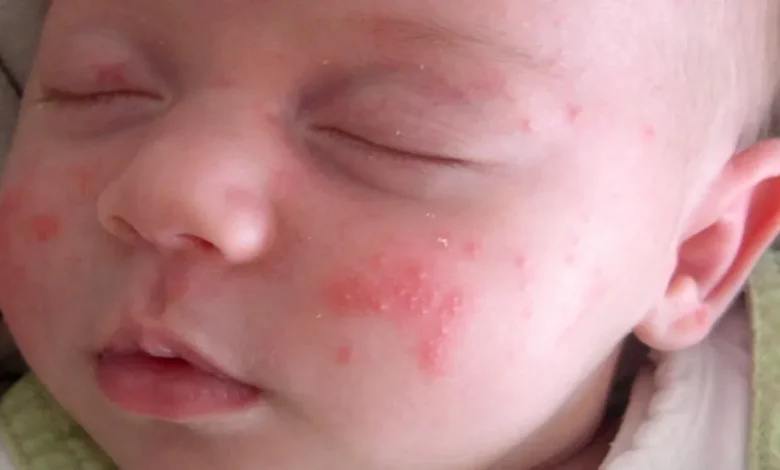
Baby acne commonly appears on the cheeks, chin, or forehead and may look like small red bumps or whiteheads. It is usually temporary and linked to hormonal changes after birth.
Care tips:
Wash gently with warm water and mild baby cleanser. Avoid scrubbing or using acne products meant for adults.
Eczema (Atopic Dermatitis)
Eczema causes dry, itchy, and sometimes flaky patches of skin. It often appears on the face, arms, or legs and may flare periodically.
Care tips:
Use fragrance-free moisturizers regularly, avoid harsh detergents, and dress your baby in soft, breathable fabrics.
When to Contact a Healthcare Provider
Most baby rashes improve with basic home care. However, you should contact your pediatrician if:
- The baby rash worsens or does not improve
- Your baby seems unusually uncomfortable or distressed
- There are signs of infection, such as oozing or swelling
- The rash is accompanied by fever or other symptoms
A healthcare provider can determine whether additional treatment is needed.
Gentle Daily Skincare Tips for Babies
Supporting healthy baby skin does not require complex routines. Simple, consistent care can help prevent irritation:
- Use mild, fragrance-free soaps and cleansers
- Avoid heavily scented products
- Keep skin clean and dry, especially in creases
- Allow short periods of diaper-free time when possible
Small adjustments in daily care can significantly reduce the risk of skin irritation.
JOIN OUR WHATSAPP GROUP FOR MORE UPDATES
Don’t feel helpless.
Seeing a rash on your baby can feel overwhelming, but it is a common part of infancy. With attentive care, patience, and guidance from a healthcare professional when needed, most baby rashes resolve without long-term issues. Learning how to care for your baby’s skin is one more step in building confidence as a parent.
Trust your instincts, offer comfort, keep your baby clean and dry, and remember that your love and attention are the most important remedies of all. You’re doing an amazing job, and your baby feels safe and cared for in your arms!